Exclusive Cars, Unmatched Service
Drive the world’s finest cars and indulge in pure elegance on every journey.



Immerse yourself in a world of luxury, performance, and exclusive travel experiences: ES Magazine by Edel & Stark offers inspiring insights into supercars, lifestyle, and extraordinary destinations. Discover exciting stories, trends, and tips that go far beyond the driving experience itself.
Switzerland was built for the Lamborghini Huracán Evo Spyder. Not the other way around.
The naturally aspirated V10, the open roof, the 630 hp pushing through 2,400 meters of Alpine elevation — this is where car and country meet on equal terms. This is your guide to driving it right.
The Huracán Evo Spyder is not the fastest car in the Edel & Stark fleet. It is not the most expensive. But on a Swiss mountain pass, with the roof retracted and the V10 reverberating off granite walls at 8,000 rpm, it might be the most rewarding.
We have driven every car in our fleet across these roads. The Huracán Evo Spyder earns its place here because of what it does between the corners — the throttle response through a second‑gear hairpin on the Furka, the way the exhaust note changes pitch as you climb above the treeline on the Susten, the moment the all‑wheel drive pulls you out of a damp tunnel exit on the Grimsel and the rear tyres find grip before your brain catches up.
This is not a spec sheet. This is a road trip guide written by people who have done it.
Swiss mountain passes are not about top speed. They are about rhythm. Second gear, third gear, brake, turn, accelerate, repeat — for 40 minutes straight on a road that climbs 1,500 vertical meters through 30 hairpin turns.
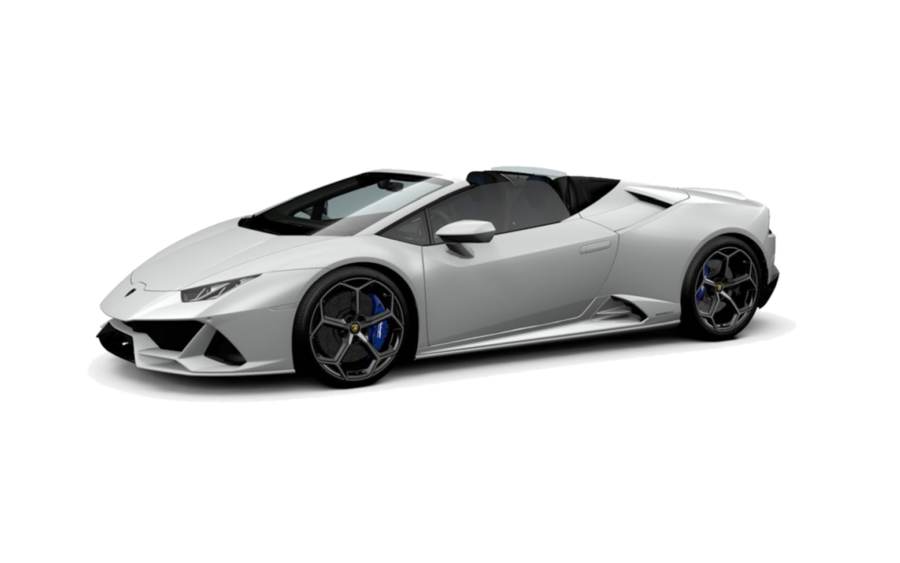
The Huracán Evo Spyder fits this rhythm precisely. The 5.2‑litre V10 produces 630 hp and 600 Nm of torque, delivered through a seven‑speed dual‑clutch gearbox and Lamborghini’s all‑wheel‑drive system. The car weighs 1,542 kg — light enough to change direction without hesitation, heavy enough to feel planted through high‑speed sweepers.
But the numbers are not the point. The point is what happens when you drop the roof at 6 AM in Andermatt and the cold Alpine air fills the cabin before you have left the village. The point is the V10’s intake note at 5,000 rpm bouncing off a rock face on the Furka. The point is arriving at a mountain restaurant for lunch and realising you have been smiling for three hours.
The Huracán Evo Spyder is 1,945 mm wide — narrow enough for Swiss passes where oncoming PostBuses take their half of the road from the middle.
The retractable soft top opens in 17 seconds and operates at speeds up to 50 km/h. On a pass road, that means you can drop the roof at the first hairpin and feel every meter of altitude gain through every sense you have.
Start/End: Andermatt | Distance: ~120 km | Driving time: 3–4 hours + stops | Season: June–October
If you drive three roads in Switzerland, make them these. The Furka, Grimsel, and Susten passes form a triangle that can be completed in a single day from Andermatt. Each pass has a different character. Together, they are the finest concentrated driving day in Europe.
The most famous of the three. The road climbs from Realp through tight, technical switchbacks with views that open suddenly as you clear the treeline. At the summit, the Rhône Glacier is visible — or what remains of it. You can walk into an ice grotto carved fresh each spring since 1870. The descent toward Gletsch is where the Huracán Evo Spyder earns its keep: a series of fast, cambered curves that reward precise throttle control. James Bond drove an Aston Martin DB5 here in Goldfinger. You will understand why they chose this road.


Darker, more dramatic. The road passes hydroelectric dams and reservoirs with water so intensely turquoise it looks artificial. The surface is excellent. The gradient is consistent. The landscape at the summit is lunar — bare granite, no vegetation, just road and sky. From Gletsch, the climb is immediate and relentless. This is the pass where the V10 pulls hardest, working through the mid‑range as you gain altitude in long, sweeping turns.
Often called the best‑engineered road in Switzerland, and for good reason. It was built in the 1940s specifically as a scenic route — not a trade road or military path. That means the camber is designed for driving pleasure. Twenty‑six bridges and tunnels carved into the mountainside. The western descent toward Innertkirchen is the highlight: a flowing sequence of curves where the Huracán’s steering communicates every surface change through your fingertips. Porsche uses this road for promotional filming. So do we.
Drive the loop clockwise: Furka first (technical, demands focus), Grimsel second (dramatic, rewards momentum), Susten last (flowing, the perfect finale).

Start: Zurich | End: Andermatt | Distance: ~160 km | Driving time: 3 hours + stops | Season: May–October
If you are collecting the Huracán Evo Spyder in Zurich — delivered to your hotel by our team — the Klausen Pass is the most direct route to Andermatt that avoids the motorway entirely. At 1,948 m, it is lower than the Big Three passes and opens earlier in the season, sometimes as early as May.
The drive from Zurich follows the shores of Lake Zurich and the Linth plain before climbing into the canton of Uri. The Klausen is a different kind of pass: gentler gradients, flowing curves, lush green meadows with grazing cattle, and a cobblestoned section at the summit that looks like it belongs in a pre‑war hillclimb photograph. The descent into Altdorf is steep and rewarding.
From Altdorf, the Schöllenen Gorge road takes you through the Devil’s Bridge — one of the most dramatic pieces of road infrastructure in Switzerland — and directly into Andermatt.
Lunch stop: Altdorf has a handful of traditional restaurants where you will not be the first person to park a supercar outside. The town is accustomed to it.
Start: Chur or Zurich | End: St. Moritz / Poschiavo | Distance: ~200 km | Driving time: 4–5 hours + stops | Season: Julier open year‑round; Bernina May–November
For drivers who want sweeping curves rather than tight hairpins, the Engadine delivers. This is a different side of Swiss driving — fast, open, and visually spectacular at a different scale.
Climbs from Silvaplana in wide, confident bends. The road surface is excellent, the visibility is long, and the Huracán Evo Spyder can stretch its legs here in a way the tighter passes do not allow. The views into the Engadine valley are vast.
The gentlest of the group — a descending road from the Engadine toward Italy’s Val Bregaglia, with Lake Sils shimmering behind you. It is more of a scenic cruise than a technical challenge, but it sets up what comes next.

This is where the route becomes exceptional. The road surface is high‑quality tarmac with flowing hairpins. The Bernina Express train runs alongside the road for several kilometers — a red train winding through the same curves you are driving, framed by glacier peaks. The descent into Poschiavo takes you from Alpine tundra into Italian‑speaking Switzerland in 30 minutes. The temperature rises, the vegetation changes, and the culture shifts. One country, two worlds.
The Bernina Pass is where you will take the photograph that ends up framed above your desk. The Huracán Evo Spyder, the train, the glacier — it happens in a single frame.
Start: Andermatt | End: Bellagio / Como | Distance: ~200 km | Driving time: 4 hours + stops | Season: June–October

The Gotthard Pass has been Switzerland’s most important north–south crossing for centuries. The modern tunnel handles the traffic. The old pass road — the Tremola — is yours.
The Tremola is a cobblestoned descent of 24 hairpins cut into the mountainside. It is narrow, it is dramatic, and in the Huracán Evo Spyder with the roof down, it is one of the most atmospheric drives in Switzerland. The cobblestones demand respect — slow down, feel the surface, and take in the scale of the engineering that built this road by hand.
From the Italian side of the Gotthard, the road drops into Ticino — Switzerland’s Italian‑speaking canton. The air warms. Palm trees appear. Within two hours you are on the shores of Lake Como, pulling up to a villa in Bellagio.
This route transforms a Swiss road trip into an Italian one without a single border stop. The car, the pass, and the lake — three acts of a single story.
Dinner stop: Bellagio’s waterfront restaurants are accustomed to supercars. Parking is tight. The Huracán Evo Spyder fits where a Bentley Bentayga would not.
Swiss mountain passes are seasonal. The high passes — Furka, Grimsel, Susten, Gotthard (old road) — typically open in early to mid‑June and close in October, depending on snowfall.
Late June through September is the reliable window. The roads have been swept of winter debris, the weather is warmest, and daylight extends past 9 PM — which means golden hour on a mountain pass at 8:30 PM with the V10 echoing through an empty valley.
Early morning is the secret. Start driving by 6:30 or 7 AM. The passes are empty. The light is soft. The air is cool enough that the engine breathes better and the tyres grip harder. By 10 AM, the tourist coaches arrive. By noon, the PostBuses own the road. The serious driving happens before breakfast.
Weather changes fast. A cloudless morning in Andermatt can become rain at the Furka summit by midday. The Huracán Evo Spyder’s roof closes in 17 seconds. Check the webcams before you leave — most Swiss passes have live cameras at the summit.


The obvious choice, and for good reason. A five‑star hotel in the heart of the pass triangle, with parking that can accommodate a Huracán without stress. The Asian‑Alpine fusion design is unlike any other Swiss hotel. From the lobby, the Furka Pass road is 15 minutes away.
For drivers combining the Big Three loop with the Bernese Oberland. The hotel has been hosting guests since 1865 and has adapted gracefully to the needs of clients who arrive in cars that cost more than most apartments.


If the Engadine route is your focus, this is where you stay. The hotel defines old‑world Swiss glamour. The concierge will know which passes are open before you ask.
For the Gotthard‑to‑Como route. Park the Huracán on the lakefront, have dinner on the terrace, and reflect on the fact that you drove here from a Swiss mountain pass this morning.

The Lamborghini Huracán Evo Spyder is available from Edel & Stark across Switzerland — delivered to your hotel, your chalet, Zurich Airport, or any address you choose. Our team has driven these routes. We know which pass to recommend for your dates, which hotel has the best parking, and which morning forecast means you should start with the Susten instead of the Furka.
This is what 14 years of luxury car rental in Switzerland looks like. Not a booking form. Not a call centre. A conversation with someone who has the keys and knows the roads.
Whether you prefer the raw intensity of the Huracán Evo Spyder or the precision of a Porsche on Swiss passes, or even a guided sports car tour with hotels and restaurants included — we build the experience around you.
When you are ready to drive the Swiss Alps in a Lamborghini Huracán Evo Spyder, Edel & Stark is ready to hand you the keys.
Contact us to plan your road trip. We deliver the car. You drive the passes.
Plan Your Lamborghini Huracán Evo Spyder Road Trip Now

 Wednesday, 1. April 2026
The Best Swiss Driving Routes for the Porsche 911 Turbo S Cabriolet
 Wednesday, 15. April 2026
Porsche 911 Turbo S Convertible vs. Ferrari F8 Spider: Swiss Pass Showdown
You might also like this:

Monday, 29. June 2026
2027 Mercedes S-Class: AI Luxury, V8 Power & Full Review
The term "core model" is often associated with a legendary car that defines a brand, such as the Porsche 911, BMW 3-Series, or Volkswagen Golf. But which model best represents Mercedes? While there are several worthy contenders, for us the answer is clear: the S-Class remains the brand's true core model.
Read more
Friday, 1. May 2026
The Porsche 911 Turbo S Convertible Experience: Where Swiss Luxury Meets German Engineering
The Porsche 911 Turbo S Cabriolet combines uncompromising performance with exclusive driving comfort—and truly comes into its own on Switzerland’s most beautiful roads. Experience how German engineering and Swiss luxury merge to create a driving experience that stirs the emotions and meets the highest standards.
Read more
Wednesday, 15. April 2026
Porsche 911 Turbo S Convertible vs. Ferrari F8 Spider: Swiss Pass Showdown
Drive two of the world's most exhilarating supercars across Switzerland as the Porsche 911 Turbo S and Ferrari F8 Spider go head-to-head on spectacular alpine roads. Discover how German precision and Italian passion deliver two very different interpretations of open-top performance in this unforgettable comparison.
Read more


